102,598
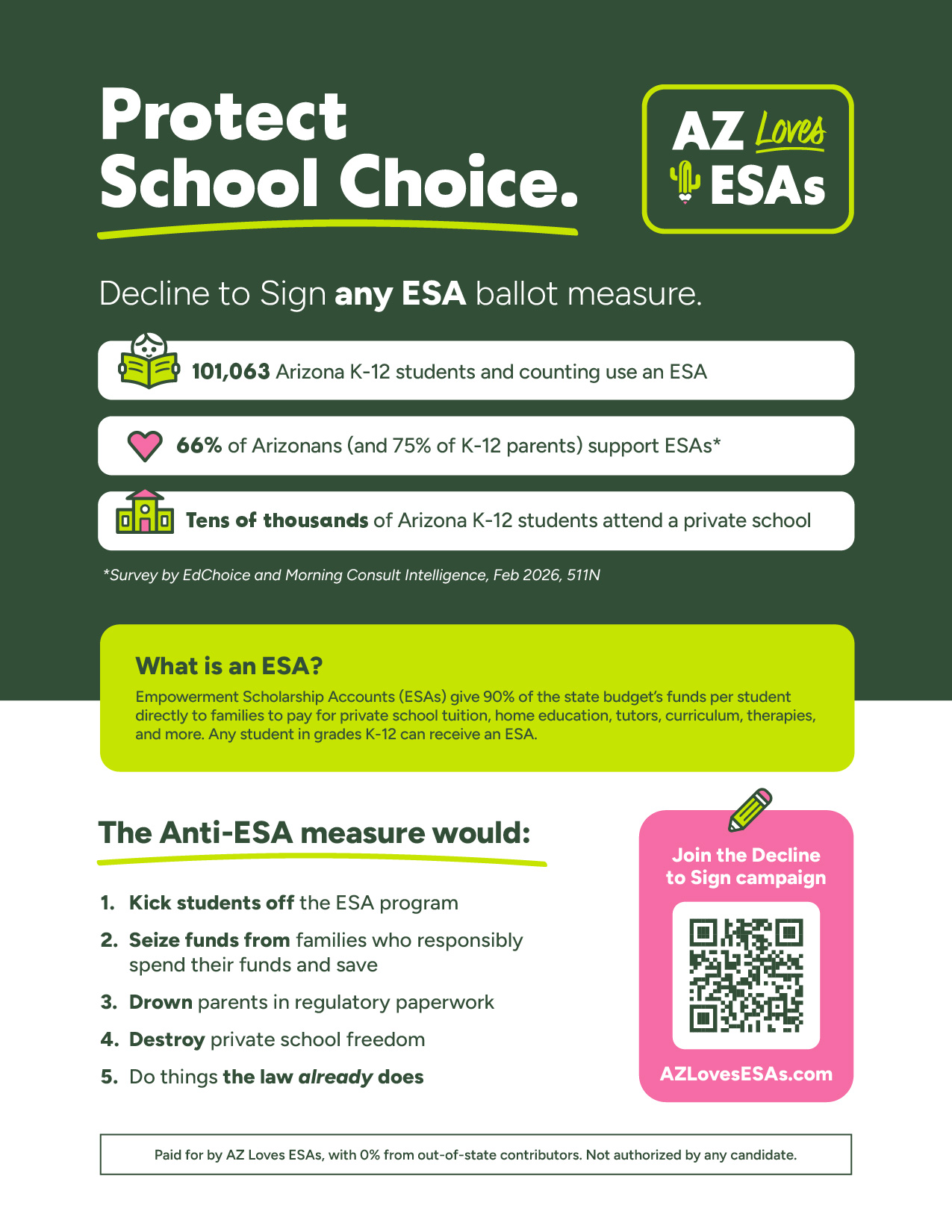
Arizona K-12 children use an Empowerment Scholarship Account (ESA).
66%
of Arizonans support ESAs.*
Tens of thousands
of Arizona K-12 students attend a private school
*Survey by EdChoice and Morning Consult Intelligence, Feb 2026, 511N
Every Arizona student deserves an education that meets their unique needs.
Protect ESAs. Decline to Sign ANY ESA ballot measure.

Facts
The education union and activist groups pushing an anti-ESA ballot measure market it as “accountability” (already covered by the law) and hide their real goal: killing school choice in Arizona.
The Anti-ESA measure would:
1. Kick students off the ESA program
Currently, Arizona’s ESA program – like our public schools – are accessible to any student, regardless of income. But this measure would set arbitrary income limits that kick current students off the program, failing to account for cost of living where the child lives, the size of their family, and other relevant facts.
2. Seize funds from families who responsibly spend their funds and save
If a family doesn’t use 100% of their funds in a given year, choosing to save them for expected expenses the following year or towards an AZ college or trade school, the measure would allow the state to seize those funds at the end of the year and give them to public district schools. This would penalize families and incentivize users to drain their accounts rather than spend smart.
3. Drown parents in regulatory paperwork
Parents already have to provide receipts for their purchases, credentials for tutors and therapists, and other documentation to use their scholarship funds. This measure would drown parents in even more paperwork, demanding they justify in writing the most basic purchases, like pencils or books.
4. Destroy private school freedom
The measure would dictate private schools follow the same mandatory testing that public schools use (which has led to low proficiency rates) and be accredited by gatekeeping organizations that can stifle options and competition. The measure intentionally leaves the door open to even more regulation of private schools with this line: “Nothing in this Act shall be construed as limiting further regulation of the ESA voucher program.”
5. Do things the law already does
The Arizona ESA law already prohibits the kinds of purchases (telephones, televisions, gift cards, jewelry, large appliances, bounce houses, etc.) that anti-ESA activists are using as justification for this measure. Under the current law, users who have used funds for prohibited items have been identified, had their accounts suspended, are required to pay back the misused funds, and in some cases, have faced criminal prosecution.
Dig Deeper: